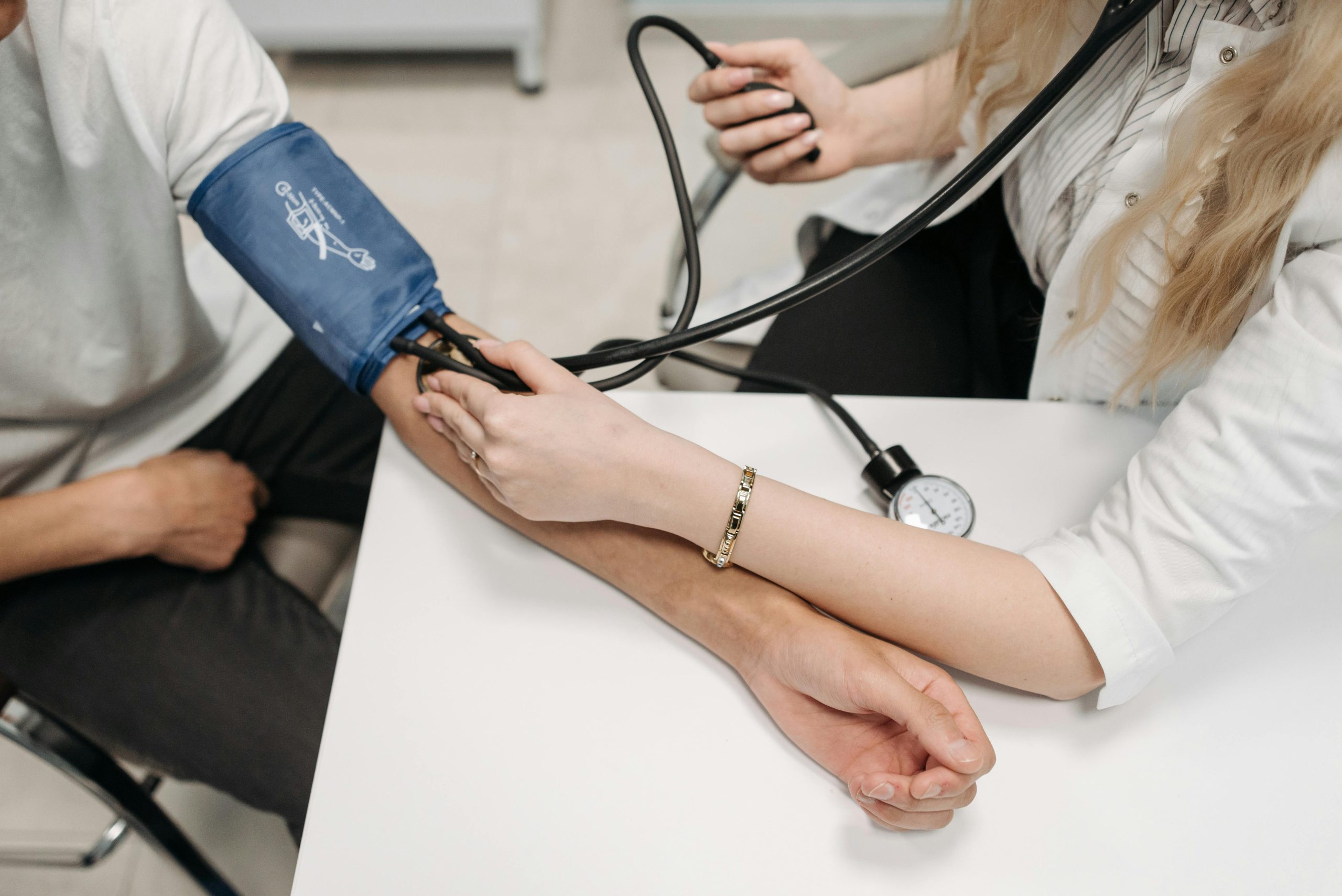
What is blood pressure
Blood pressure is the measurement of force exerted against the walls of your arteries. There are two numbers to understand, one on top and one on bottom. The top measurement is called systolic blood pressure and is the measurement of force against the artery walls as your heart beats. The bottom measurement is called diastolic blood pressure is the measurement of force against the artery walls between beats.
What should my blood pressure be
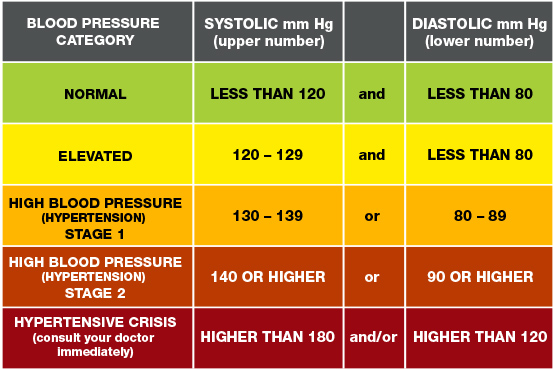
This image is from the American Heart Association. According to their guidelines, a healthy blood pressure reading is below 120/80. Anything above 129 for systolic (the top number) or above 80 for diastolic (the bottom number) is considered high blood pressure, also known as hypertension. While both numbers often rise together, it’s possible for only one to be elevated while the other remains in a healthy range, and that still qualifies as high blood pressure.
Causes of high blood pressure
-Excessive dietary salt
-Lack of adequate physical activity
-Being overweight
-Excessive alcohol consumption
-Smoking
-Chronic stress
-Drug use
-Excessive caffeine use (Daily limit per FDA guidelines is 400mg per day)
-Mental health conditions, such as anxiety
-Family history of high blood pressure
-More common with age
-Sleep Deprivation
-Kidney disease or dysfunction
-Sleep apnea
-Diabetes
Symptoms of high blood pressure
High blood pressure often has no noticeable symptoms and can go undetected until a routine check-up. If you already have blood pressure issues, having a home monitor can be a valuable tool for keeping it under control and staying on top of your health.
What can you do about it
High blood pressure isn’t the end of the world, but it can be a valuable wake-up call to start taking better care of your body. Having high blood pressure doesn’t automatically mean you live an unhealthy lifestyle. Sometimes it’s a symptom of another condition or something that needs to be managed with medication. That’s a conversation best had with your doctor. The tricky part is that high blood pressure is often symptomless and can be caused by a wide range of factors. I’ve broken those down below and will go into each one in more detail.
Doctors Orders
I’m not a doctor, and if you have high blood pressure, I highly recommend speaking to yours. If anything your doctor says conflicts with what I share here, go with their advice. They know your personal health history, can run the necessary tests, and prescribe medication if needed.
Sometimes high blood pressure is a symptom of an underlying condition that needs to be treated first. Medication gets a bad rap, but for many people, it can be an essential part of getting things under control, at least temporarily. Starting medication doesn’t necessarily mean you’ll be on it forever. If lifestyle factors are the main cause, you may be able to wean off medication after making consistent improvements.
Weight Management
This one is fairly simple, but often times the most difficult in execution. The heavier you are, the harder your heart has to work to pump blood throughout your body. We want to get down to a healthy level of body fat, around 15% for men and 25% for women.
I wont go in depth here about losing weight, but you can check out my other content about weight loss strategies and maintaining a healthy weight long term.
Physical Activity
Cardiovascular training is the main focus here. If your blood pressure is really high, it’s best to start light. Intense training spikes blood pressure, and when you’re already elevated, that can increase the risk of dizziness or even fainting.
Wherever you are in your fitness journey, a maintenance phase is smart until your blood pressure is stable. If you’re just starting out, walking is one of the best tools you’ve got. It’s low intensity, easy on the joints, and excellent for cardiovascular health. Additionally, it can also support weight loss, which brings even more benefits.
Nutrition
Nutrition goes hand-in-hand with physical activity and weight management. Weight loss starts in the kitchen, and you can’t out train a bad diet.
In relation to high blood pressure, pay attention to your sodium and saturated fat intake. Focus on whole, nutrient-dense foods: fruits, vegetables, lean proteins, and whole grains. High-fiber foods also support heart health.
I also recommend making more meals at home. Restaurant food is often loaded with hidden sodium and fats.
Sleep Hygiene
Sleep hygiene refers to the habits and environment that support good sleep. The best starting point is to go to bed and wake up at the same time every day. The easiest way to do this is to wake up at the same time consistently, and your bedtime will naturally adjust.
Aim for around 8 hours of sleep. It doesn’t matter if that’s 10 PM to 6 AM or midnight to 8 AM. Consistency is more important than the exact hour.
Keep your bedroom dedicated to sleep and sex. Move your phone and TV to another room if possible. Try to avoid screens for at least an hour before bed because the blue light can throw off your circadian rhythm and make it harder to fall asleep.
If you’re looking for more sleep support, check out the CBT-i Coach app. It was developed by the Department of Veterans Affairs and is a solid tool if you want accountability and tips for better sleep. I’ve personally used it and found it helpful.
Mental Health and Stress
This isn’t my area of expertise, but I’ll say this, if you’re struggling with your mental health, there’s no shame in talking to a therapist or other qualified professional.
From a physical health perspective, aerobic exercise, especially 30+ minute sessions, can help reduce stress and support mental health. If you’re managing high blood pressure, start with walking or stick with your current routine. Getting outside for those walks adds even more mental benefits. Additionally, supporting your body with healthy foods can also help with overall health and mental health in turn
Stop smoking, caffeine, and drug use
Substance use, smoking, and excessive caffeine can all raise blood pressure. If you’re struggling to quit, an addiction counselor or therapist can be a huge help, and regular exercise can also support your efforts to quit.
As for caffeine, many people take it in their pre-workout, but if you have high blood pressure, I’d recommend avoiding that. Exercise already raises your blood pressure, and caffeine adds to that increase. Combine that with existing hypertension and you’re looking at a risky situation.
According to the FDA, caffeine intake should stay under 400mg per day, but even less is better if you’re trying to manage blood pressure.