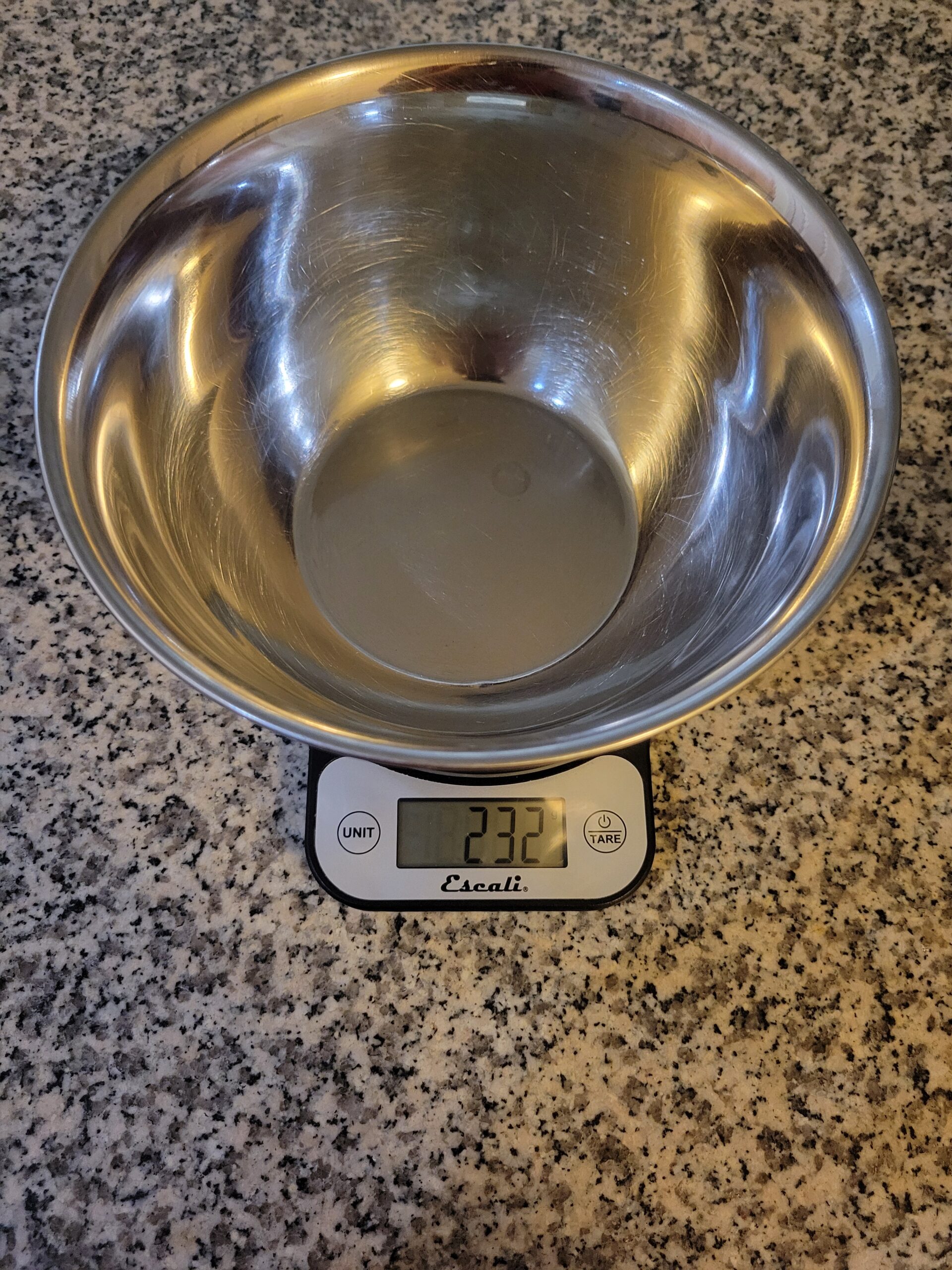
If there’s one investment I think every kitchen needs, it’s a food scale. Most people assume I’m about to go into a lecture on calorie tracking, and yeah, it can help with that. But that’s not the main reason I recommend it.
Truth is, I use my food scale way more for everyday cooking than I do for tracking macros. The precision, consistency, and ease it brings to your meals; that’s the real value. The calorie tracking is just a bonus.
- Consistency Every Time
- How much is a cup? rounded? flat? packed?
- Ensures the same results every time, especially important for baking
- Faster Prep
- Skip the scooping and leveling. Just pour and weigh, it’s quicker and cleaner.
- Easier Recipe Scaling
- Double it, halve it, and adjust servings accurately without guesswork
- Better Portion Control
- Learn what a serving looks like just by being in the kitchen
- Less Waste
- No leftover bits stuck in measuring cups or inaccurate estimations leading to excess
- Easier Cleanup
- Just one bowl on the scale, instead of multiple measuring cups and spoons
- Save Money
- No need to buy all those measuring cups and spoons because this can replace almost all of them
- Works for Solids and Liquids
- No need for separate measuring tools for dry and wet ingredients
- More Accurate Macros
- Essential for accurately following your nutrition plan
- No Unit Conversions Needed
- Avoids errors in conversions, simply set the scale and tare
Pro Tips for Using a Food Scale
- Place your bowl or plate on the scale before adding anything, then tare it to zero.
- Always hit tare after adding each ingredient.
- Use grams, they’re more precise and easier to scale.
- 1 mL of water = 1 gram (works with most liquids)
- Weigh ingredients as you go, don’t overthink it.
How do I start using one?
Using a food scale is stupid simple. In fact, it’s actually way easier than not using one. All you need is a scale and a couple of mixing bowls. You can find a food scale pretty much anywhere; grocery stores, health stores, department stores, and Amazon. They usually run about $10–$20 and last for years.
It might take a day or two to get used to weighing things instead of eyeballing, but trust me, you’ll be glad you made the switch. So do yourself a favor: grab a food scale and get your ass in the kitchen!

